The five high-impact universal-design choices
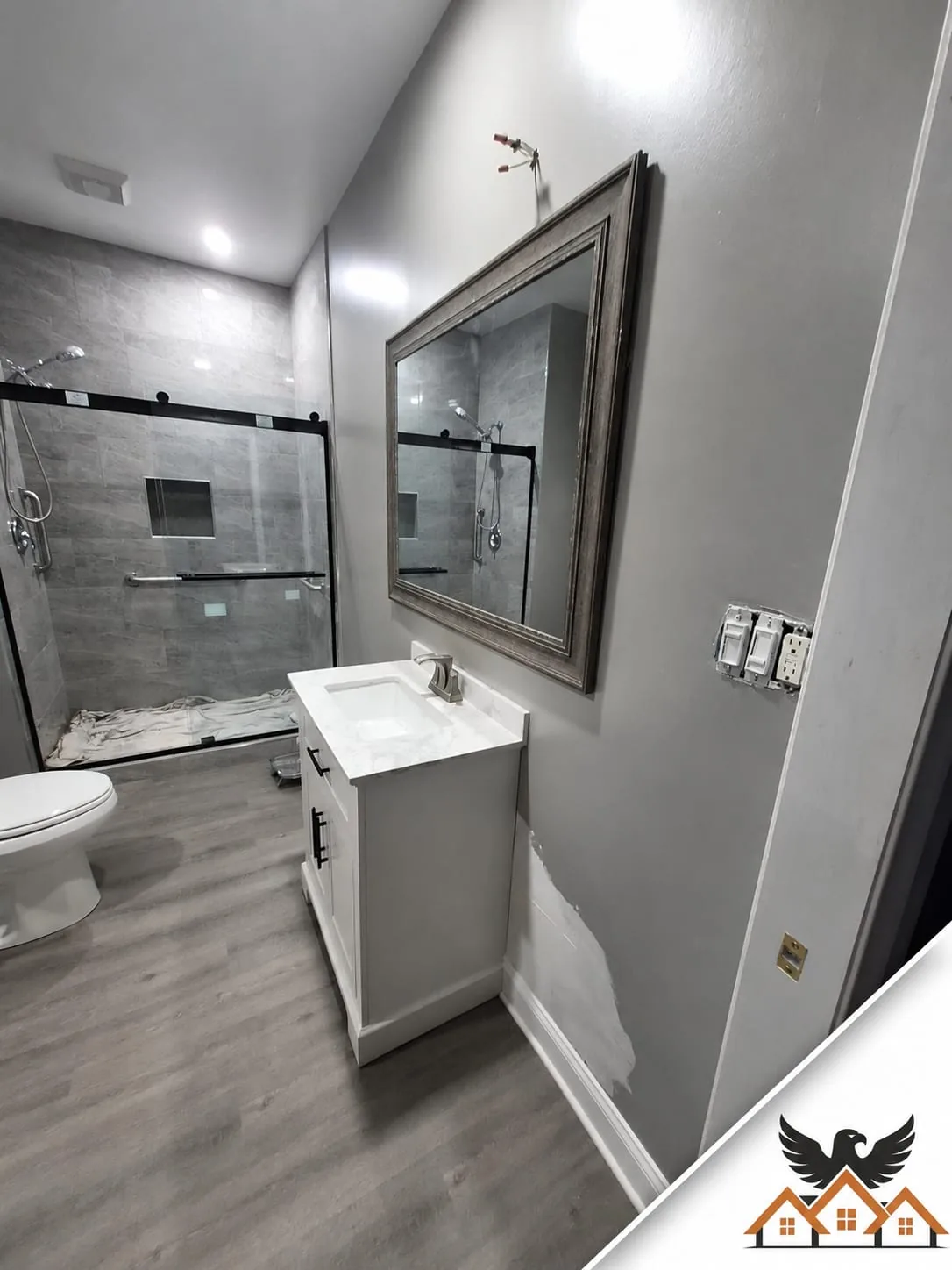
Curbless walk-in shower. No threshold, pre-sloped pan, linear drain. Easier to use today, essential later.
Grab-bar reinforcement (blocking) in walls. $200 in framing today vs $2,000+ to retrofit later. Add 2x10 backing in shower walls and toilet wall during framing — bars install later only when needed.
Lever handles instead of round knobs. Plumbing fixtures, door handles, cabinet pulls. Easier on arthritic hands and a more refined look anyway.
Comfort-height toilet. 17–19" rim height instead of standard 14–15". Standard now, future-friendly later.
Wider doorways (32" or 36"). Wheelchair-accessible. In a renovation, easy to spec; in a finished bathroom, requires structural work.
Subtle adds that age well
Anti-slip floor tile. DCOF rating ≥ 0.42 for wet areas. Looks identical to standard tile.
Heated floor. Comfort today, easier on stiff joints later. $1,200–$2,000 add for a typical primary bath.
Better lighting. Task lighting at vanity, low-glare general, motion-activated night lighting. Vision changes with age — design for that ahead of time.
Scald-prevention valves on shower and tub. Code-required on new installations; worth confirming if you're replacing fixtures only.
What to skip
Roll-in shower benches. Add later if needed. Permanent benches can crowd a primary bath that doesn't need them yet.
Visible institutional handles or grab bars. Use the wood-blocking strategy — let the bars install only when you actually need them, in the style you choose then.
More from the blog