
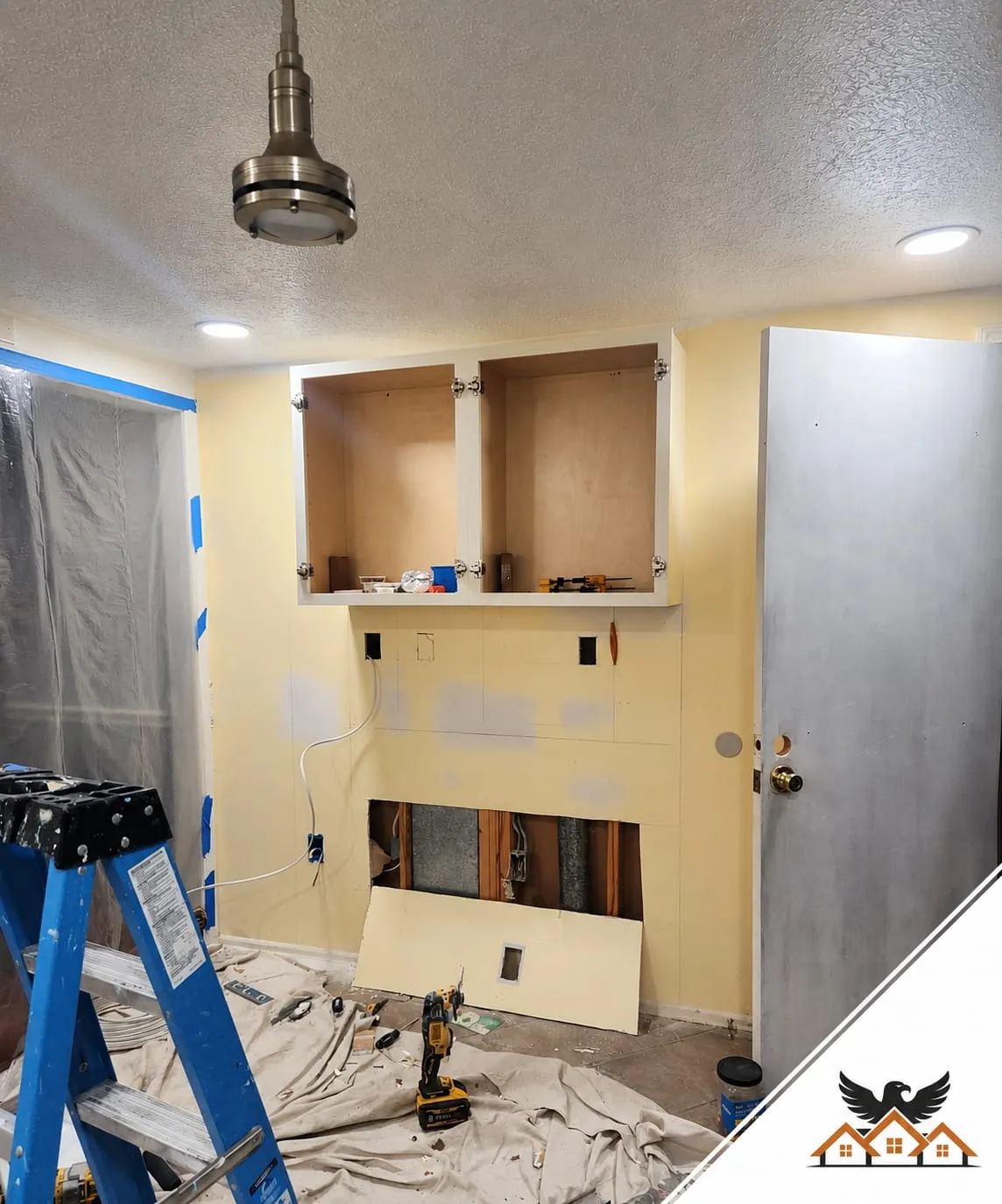
Plaster, and why your walls are not flat
Lath-and-plaster walls are durable and quiet, but they are not the flat, plumb surfaces modern cabinets and tile assume. Kitchen and bath work in plaster houses includes furring, patching or selective drywall replacement so finished work sits true. Plaster also makes demo slower and dustier — it comes out in tons, literally — which is priced into a real quote rather than discovered by one.
The mechanical trio: galvanized, cast iron, knob-and-tube
Galvanized supply pipe corrodes from the inside and strangles water pressure; cast-iron drains crack at branch joints; knob-and-tube wiring cannot be buried in insulation and worries insurers. A serious kitchen or bath remodel in a pre-1960 home should expect to replace the plumbing and wiring it touches — not as an upsell, but because closing new tile over seventy-year-old pipe is how remodels fail early. Our whole-home renovation process scopes systems before finishes for exactly this reason.
Floors, joists and the geometry of old houses
Old joists were sized by rule of thumb, so floors slope and bounce by modern standards. Tile needs a stiff, flat substrate; big islands need load paths checked. Sistering joists, adding blocking and leveling compounds are unglamorous line items that decide whether the finished room feels solid. In additions, the engineer's job is marrying new, level construction to a house that has had a century to settle.
Budgeting for the unseen — the honest method
We open inspection holes before quoting wherever the plan allows, photograph what we find, and price the known conditions into the fixed quote. Then we still recommend a contingency conversation for anything behind the walls we could not see. Older homes reward this honesty: the projects that go sideways are the ones quoted from the surface. Own an older Maryland home? Start with a walk-through at your kitchen table: call (240) 266-8317.
Frequently asked questions
Should plaster walls be replaced with drywall during a remodel?
Only where they are opened or damaged. Sound plaster is an excellent wall — we patch and skim it, and reserve full replacement for rooms being gutted or reconfigured anyway.
Is knob-and-tube wiring always a problem?
It must not be covered by insulation and many insurers dislike it. In rooms we remodel, circuits we touch are replaced to current code; a whole-house rewire is scoped separately when the house needs it.
Do historic districts restrict remodeling?
Interior work is rarely restricted, but exterior changes in designated historic districts (parts of Annapolis, Emmitsburg, and local districts) can need historic-area commission review. We check your property's status during design.